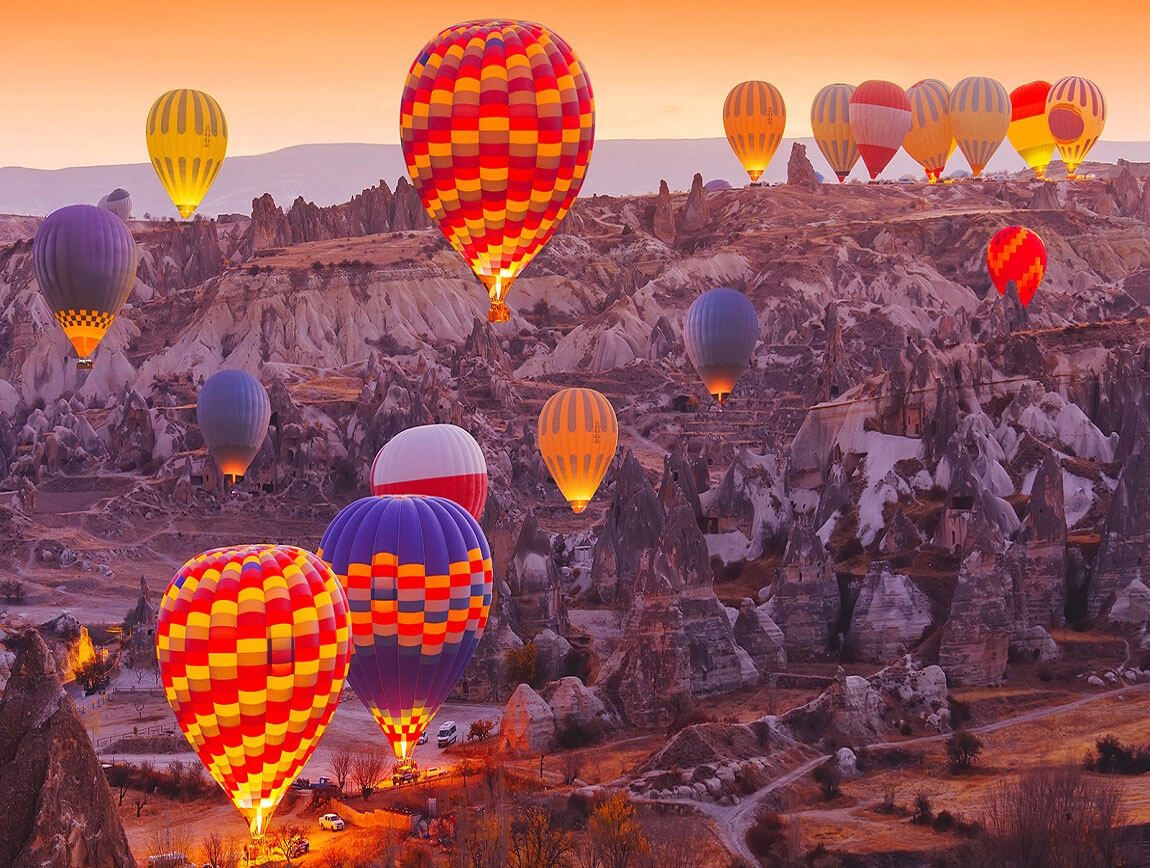
The Cappadocia region was formed 60 million years ago, when the soft layers of lava and ash erupted by Mount Erciyes, Mount Hasan and Mount Göllü were worn down by rain and wind over millions of years. It spreads across Nevşehir and the provinces of Kırşehir, Niğde, Aksaray and Kayseri.
Cappadocia is a place where nature and history merge. While geological forces shaped the fairy chimneys, people carved homes and churches into these rocks and decorated them with frescoes, carrying the traces of thousands of years of civilisation to the present day. Settlement here goes back to the Paleolithic era, and its written history begins with the Hittites; the region was also one of the key crossroads of the Silk Road.
With the collapse of the Hittite Empire in the 12th century BC, late Hittite kingdoms came to rule the region until the Persian invasion in the 6th century BC. The name Cappadocia is generally thought to mean "Land of Beautiful Horses" in Persian. Alexander the Great defeated the Persians in 332 BC but met fierce resistance in Cappadocia, where the Kingdom of Cappadocia was founded. When the last Cappadocian king died in AD 17, the region became a province of Rome.
From the 3rd century AD, Cappadocia became a centre of learning and thought for the Christians who settled here. Deep valleys and shelters carved into the soft volcanic rock offered safety to those fleeing persecution. The 4th century was the age of the "Cappadocian Fathers"; during the Iconoclasm (726–843), supporters of icons took refuge in the region and its monasteries flourished.
In the 11th and 12th centuries Cappadocia passed to the Seljuk Turks, and under the Seljuks and then the Ottomans the region enjoyed a peaceful period. The last Christians of the region left Cappadocia in the 1924–26 population exchange under the Treaty of Lausanne, leaving behind beautiful examples of architecture.